

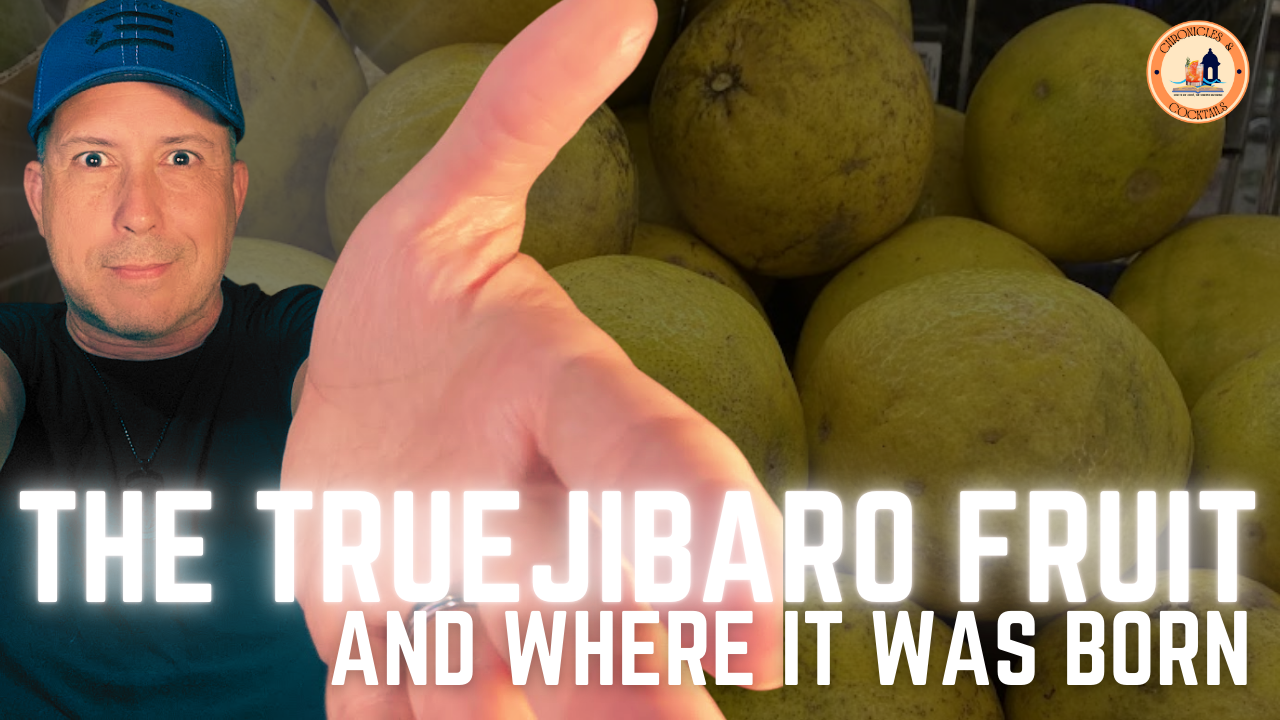
The Forgotten Fruit Born in Puerto Rico
Puerto Rico is home to remarkable natural wonders, rich traditions, and a history shaped by Indigenous peoples, European empires, Africa, and the Caribbean. Yet among all of its treasures is one that remains surprisingly unknown—even to many Puerto Ricans.
It isn’t El Yunque.
It isn’t the coquí.
It isn’t coffee.
It’s a fruit.
A citrus fruit that scientists believe was born naturally in Puerto Rico, making it one of the most unique agricultural discoveries in the island’s history.
Its name is the chironja.
Discovered in the mountains of Utuado, the chironja is more than a delicious citrus. It is a symbol of Puerto Rico’s biodiversity, agricultural heritage, and the remarkable ability of nature to create something entirely new.
What Is a Chironja?
At first glance, the chironja looks like a large orange or a small grapefruit. Its thick rind, golden color, and sweet aroma suggest both fruits at once.
That is because it is.
The chironja is widely recognized as a natural hybrid between the sweet orange (Citrus sinensis) and the grapefruit (Citrus paradisi), but unlike many commercial hybrids developed by horticulturists, this one appears to have emerged spontaneously in Puerto Rico’s central mountains.
It wasn’t intentionally crossbred.
It wasn’t genetically engineered.
Nature did the work.
The name itself combines the Puerto Rican words china (orange) and toronja (grapefruit), perfectly describing its ancestry.
A Discovery in Utuado
The story begins during the 1950s.
Agronomist Carlos E. Moscoso noticed unusual citrus trees growing near the University of Puerto Rico’s agricultural facilities in Utuado. The fruit possessed characteristics unlike any citrus previously cataloged.
In 1958, Moscoso formally introduced the chironja to the scientific world through his landmark paper published in Economic Botany, describing its distinctive appearance, flavor, and agricultural promise.
Scientists observed that the fruit combined many of the best qualities of oranges and grapefruit.
It was:
- Sweeter than grapefruit
- Less bitter
- Highly aromatic
- Easy to peel
- Exceptionally juicy
The discovery immediately attracted international attention among citrus researchers.
A Fruit Born in One of Puerto Rico’s Most Historic Towns
Perhaps the most poetic aspect of the chironja’s story is where it appeared.
The fruit was discovered in Utuado, one of Puerto Rico’s oldest inland municipalities.
Founded in 1739 by Sebastián de Morfi, an officer of the Spanish Crown of Irish ancestry, Utuado has long been recognized as one of the island’s great agricultural and cultural centers.
For centuries, its fertile valleys produced coffee, tobacco, citrus, and countless other crops.
Then, more than two hundred years after Morfi founded the town, those same mountains gave the world something entirely new.
The only citrus fruit ever documented as having originated naturally in Puerto Rico.
That remarkable coincidence inspired today’s featured cocktail on Chronicles & Cocktails.
The Irish Connection Behind the Cocktail
Every cocktail featured on Chronicles & Cocktails tells a story.
For this episode, the featured drink is an Irish Gin & Tonic with fresh chironja.
The pairing is symbolic.
The Irish gin honors Sebastián de Morfi, whose Irish ancestry became part of Utuado’s foundation.
The chironja represents the extraordinary fruit born in the very town he established.
Together they create more than a refreshing cocktail.
They tell a story of heritage, place, and identity—a meeting between the founder’s ancestry and the land that would eventually produce Puerto Rico’s most unique citrus.
History, quite literally, in a glass.
Scientific Research Confirmed Its Potential
Following Moscoso’s discovery, researchers at the University of Puerto Rico began evaluating the chironja’s commercial possibilities.
Food scientists José R. Benero and Luis A. Carlo Vélez studied its processing characteristics and found remarkable results.
Among their conclusions:
- The fruit peeled easily.
- It yielded an unusually high percentage of edible sections.
- Consumers rated canned chironja very favorably in taste tests.
- The fruit maintained excellent shelf stability when processed correctly.
- Because of its natural sweetness, slight adjustments in acidity improved the overall flavor balance.
Their research suggested that chironja possessed genuine commercial potential, not merely scientific curiosity.
Why Isn’t the Chironja More Popular?
That may be the biggest mystery of all.
Despite its outstanding flavor and unique history, chironja never became a major commercial crop.
Changing agricultural priorities, competition from imported citrus, hurricanes, and the decline of many traditional farms all contributed to its relative obscurity.
Today, many younger Puerto Ricans have never tasted one.
Others have never even heard of it.
Yet every November, as chironja season begins, the fruit quietly returns to markets, roadside stands, and backyard trees across parts of Puerto Rico.
Bringing the Chironja Back to the Table
One of the missions of Chronicles & Cocktails is not only to tell forgotten stories but also to revive forgotten traditions.
That is why the chironja has become one of my favorite seasonal ingredients in cocktail classes and cultural tastings.
Its bright citrus flavor creates outstanding modern cocktails while celebrating an ingredient that belongs entirely to Puerto Rico.
Rather than relying solely on imported lemons or limes, the chironja offers bartenders, chefs, and home cooks an opportunity to showcase something truly local.
Every glass becomes a conversation about history.
Every recipe becomes a celebration of Puerto Rican agriculture.
Watch the Full Episode
In this episode of Chronicles & Cocktails, you’ll discover:
- The fascinating discovery of the chironja
- The scientific research behind Puerto Rico’s unique citrus
- Why Utuado became its birthplace
- The story of Sebastián de Morfi and his Irish ancestry
- Why this forgotten fruit deserves a modern revival
- How to prepare a refreshing Chironja Irish Gin & Tonic
If you love Puerto Rican history, food, cocktails, agriculture, or simply discovering extraordinary stories hidden in plain sight, this is an episode you won’t want to miss.
Watch The Fruit That Shouldn’t Exist — And Where It Was Born on YouTube
Subscribe to Chronicles & Cocktails for new episodes exploring Puerto Rico’s history, culture, food, spirits, and the stories that connect them.
References
- Moscoso, Carlos E. The Puerto Rican Chironja—New All-Purpose Citrus Fruit. Economic Botany, 1958.
- Benero, José R., & Carlo Vélez, Luis A. Canning Chironja Sections. Journal of Agriculture of the University of Puerto Rico.
- University of Puerto Rico, Journal of Agriculture of the University of Puerto Rico.
- USDA Citrus Identification Database.
- RFC Archives – Citrus Research Collection.
- Springer Nature – Citrus hybridization research.