
The Story of the Christmas Tree, Dr. Agustín Stahl, and Bayamón’s Holiday Legacy
Every December, millions of families decorate a Christmas tree without giving much thought to where the tradition came from. For many, it’s simply part of the season—a familiar ritual of lights, ornaments, music, and family gatherings.
But the Christmas tree has a much older story.
Long before it stood in Christian homes, before electric lights, department stores, and holiday shopping, the evergreen tree was already a symbol of hope during the darkest days of winter. Its journey spans pagan Europe, medieval Christianity, Victorian England, German immigration, and eventually, the streets of Bayamón, Puerto Rico.
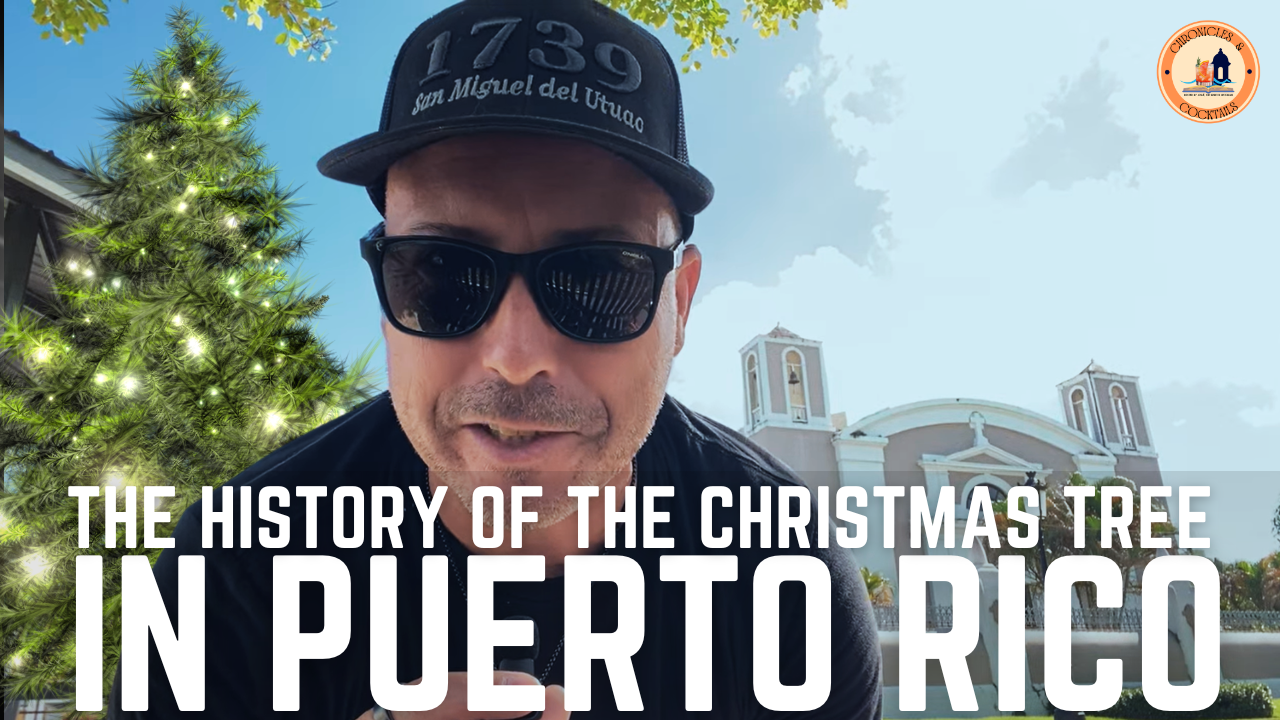
In the latest episode of Chronicles & Cocktails, we follow that remarkable journey.
The Christmas Tree Before Christmas
One of history’s greatest ironies is that the Christmas tree predates Christmas itself.
Across northern Europe, pre-Christian Germanic peoples celebrated the winter solstice by bringing evergreen branches into their homes. During a season when nearly every other plant had died back, evergreen trees remained vibrant and green, becoming symbols of endurance, hope, and the promise of spring.
The Celts also viewed evergreens as representations of eternal life, while the Romans decorated homes with greenery during Saturnalia, their famous December festival.
None of these traditions were originally connected to the birth of Jesus.
Instead, they reflected humanity’s universal desire to find light and life during the darkest season of the year.
From Pagan Ritual to Christian Symbol
Early Christian leaders often condemned pagan winter customs.
Yet history has shown that Christianity frequently transformed existing cultural traditions rather than eliminating them completely.
By the Middle Ages, churches in Germany performed Paradise Plays on December 24, commemorating Adam and Eve. The central prop in these performances became the Paradise Tree, decorated with apples symbolizing the Fall and communion wafers representing redemption.
Over time, candles were added, followed by sweets, nuts, and handcrafted ornaments.
The evergreen had become a Christian teaching tool.
Germany Creates the Modern Christmas Tree
The first documented Christmas trees appear in the early sixteenth century in what is now Germany and the Alsace region.
By the seventeenth century, decorating Christmas trees had become so popular that some German towns regulated tree cutting to prevent overharvesting.
Families decorated them with:
- Apples
- Nuts
- Gingerbread
- Paper flowers
- Wafers
- Candles
The Christmas tree had officially become a household tradition.
How the Christmas Tree Conquered the World
Two major events transformed a regional German custom into an international holiday tradition.
The first was German immigration.
German families carried their customs throughout Europe, North America, Latin America, and the Caribbean.
The second came in 1848, when an illustration of Queen Victoria and Prince Albert standing around their decorated Christmas tree appeared in The Illustrated London News.
That single image inspired families throughout the English-speaking world and beyond to embrace the Christmas tree.
In many ways, it became one of history’s earliest examples of a viral cultural trend.
The Arrival of the Christmas Tree in Puerto Rico
Puerto Rico did not abandon its traditional Three Kings Day celebrations when the Christmas tree arrived.
Instead, the island blended traditions.
By the late nineteenth century, wealthier families in San Juan and Ponce had begun displaying decorated Christmas trees influenced by European customs.
During the early twentieth century, department stores and holiday advertisements helped spread the practice even further.
Eventually, Puerto Rican families both on the island and throughout the diaspora made the Christmas tree their own.
Dr. Agustín Stahl and Bayamón’s First Christmas Tree
One of the most fascinating chapters in Puerto Rican Christmas history centers on Dr. Agustín Stahl.
Born in Aguadilla in 1842, Stahl was the son of a German father and a Dutch mother. After studying medicine in Europe for nearly a decade, he settled permanently in Bayamón during the 1860s.
According to longstanding historical accounts, Stahl introduced Puerto Rico’s first decorated Christmas tree around 1865–1866.
He recreated the German tradition he had experienced overseas, decorating a tree with lights, ornaments, artificial snow, toys, and sweets.
On Christmas Day, neighborhood children gathered around the tree to receive gifts.
Residents soon began referring to it simply as “El Árbol de Navidad del Doctor Stahl.”
Whether remembered as history, tradition, or both, the story remains one of the most beloved chapters in Puerto Rico’s Christmas heritage.
More Than a Christmas Tree
Agustín Stahl’s legacy extends far beyond Christmas.
He became one of Puerto Rico’s greatest scientists, physicians, botanists, zoologists, and anthropologists.
His monumental work, Estudios para la Flora de Puerto Rico, remains one of the foundational studies of Puerto Rican botany.
During the episode, we also explore his genealogy, historical records, and final resting place in the historic cemetery of Bayamón.
His life reminds us that science, culture, generosity, and history often intersect in unexpected ways.
Bayamón: A Crossroads of Puerto Rican History
The episode also highlights Bayamón itself.
Long before modern highways and shopping centers, Bayamón was already one of Puerto Rico’s most important communities.
Its history stretches back to Taíno settlements along the river, Spanish agricultural expansion, and nineteenth-century economic growth fueled by sugar, cattle, and commerce.
It was the ideal place for European traditions to meet Puerto Rican culture.
Today, Bayamón remains an essential chapter in the island’s historical narrative.
Cocktail of the Episode
The Bayamón Old Fashioned
Every episode of Chronicles & Cocktails pairs history with a drink inspired by the story.
For this holiday episode, the obvious choice was Ron del Barrilito, Bayamón’s legendary rum.
Ingredients
- 2 oz Ron del Barrilito
- ½ oz spiced syrup (cinnamon, clove, anise)
- 2 dashes aromatic bitters
- 1 drop almond extract
- Orange peel
- Toasted rosemary sprig
The result is a rich, aromatic Old Fashioned that blends Caribbean rum with flavors inspired by traditional European Christmas baking.
It is, quite literally, Bayamón in a glass.
Watch the Full Episode
If you’ve ever wondered why we decorate Christmas trees—or how that tradition arrived in Puerto Rico—this episode tells the story from its ancient pagan beginnings to its place in modern Puerto Rican homes.
Along the way, you’ll discover forgotten history, explore the life of Dr. Agustín Stahl, walk through historic Bayamón, and finish with one exceptional holiday cocktail.